
It is a legal requirement that fire extinguishers have regular inspections. The benefits of these inspections include:
Supports legal compliance
Helps businesses meet their fire-safety duties under UK legislation, including the Regulatory Reform (Fire Safety) Order 2005 in England and Wales.
Protects lives
Ensures extinguishers are available and operational when needed, helping control a fire during its early stages.
Ensures equipment is fit for purpose
Inspections identify issues such as damage, corrosion, pressure loss, blocked nozzles or missing safety pins.
Reduces fire damage
A correctly maintained extinguisher can help prevent a small fire from becoming a major incident.
Provides appropriate fire protection
Helps ensure the correct extinguisher types and locations are provided for the risks present.
Improves staff confidence
Employees can be confident that firefighting equipment is accessible and ready for use.
Supports risk assessments
Inspection records demonstrate that fire-fighting equipment is being actively managed as part of the premises’ fire-safety arrangements.
Prevents avoidable costs
Identifying faults early can reduce the likelihood of equipment failure and expensive fire-related damage.
Maintains clear access and visibility
Inspections can identify extinguishers that have been obstructed, moved or incorrectly positioned.
Creates an audit trail
Documented servicing and maintenance provide evidence of regular checks and remedial action.
Summary
Regular fire extinguisher inspection and maintenance help ensure equipment is safe, accessible, suitable and operational, while supporting UK fire-safety compliance and protecting people and property.
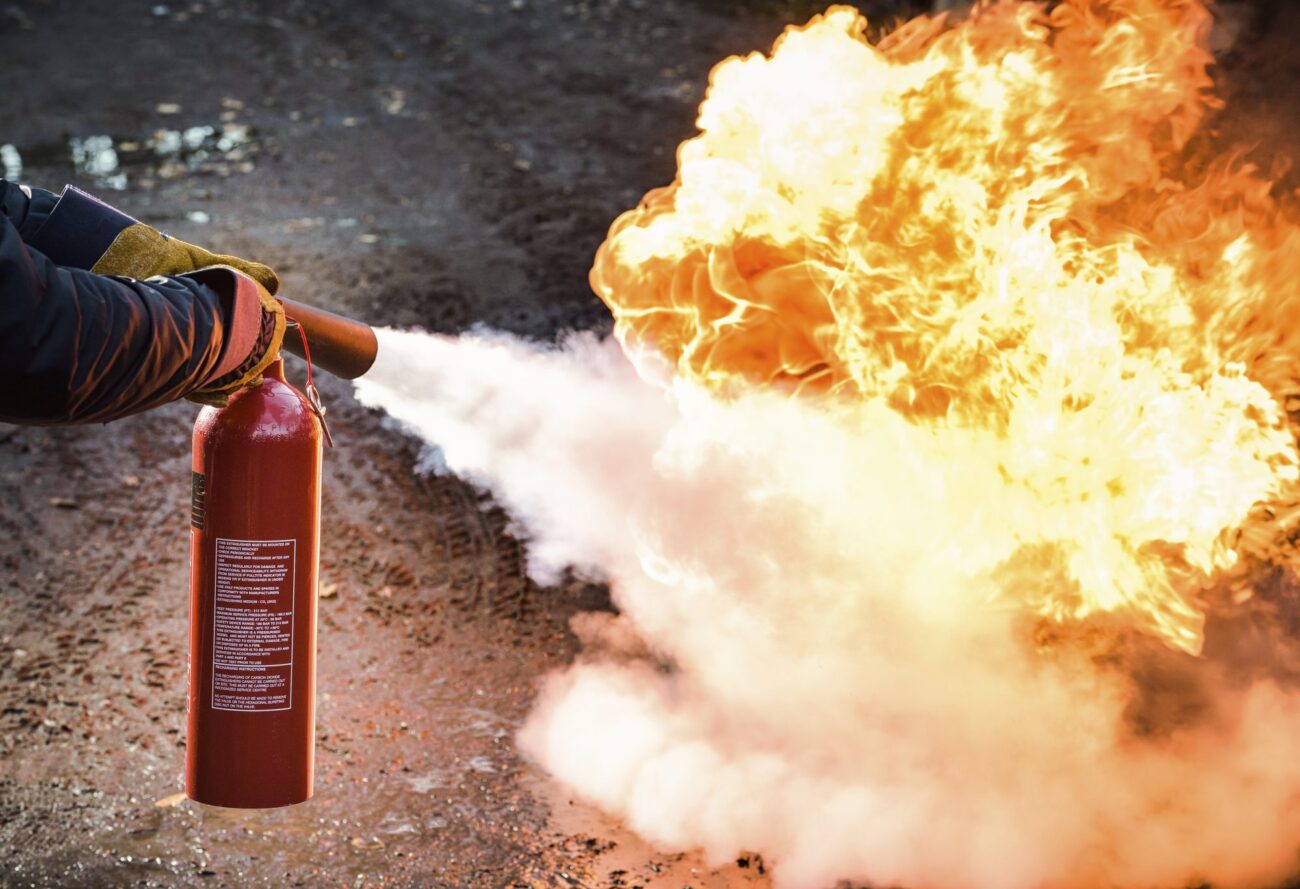
Here are some key benefits of fire extinguishers
Leave your contact details and Caldera FS will contact you and discuss your requirements.
Caldera FS will advise of the type and the number of extinguishers required in your property.
Caldera FS will contact you to arrange a convenient time for the extinguishers to be installed in your property.
Caldera FS will provide you with a commissioning report relating to the extinguishers installed in your property. This provides evidence of your extinguishers’ compliance in line with BS-5306-3.
Caldera FS will keep you abreast of any legislative changes that may affect the fire extinguishers installed in your property. We will also complete routine servicing as required, to ensure the fire extinguishers are in a serviceable condition.
FAQ
A fire extinguisher is a portable device used to control or put out small fires in an emergency. It works by discharging an agent such as water, foam, powder, CO2, or wet chemical that removes one of the three elements a fire needs to burn: heat, fuel, or oxygen. They’re intended for tackling fires in their early stages, not for fighting large or spreading blazes.
There are five main types, each colour-coded and suited to different fire classes. These are water (red label, for Class A materials like paper, wood, and textiles), foam (cream, for Class A and B flammable liquids), CO2 (black, for electrical fires and flammable liquids), dry powder (blue, a multi-purpose option for A, B, C and electrical), and wet chemical (yellow, for Class F cooking oils and fats). Most workplaces need a combination rather than a single type.
Each extinguisher attacks the “fire triangle” of heat, fuel, and oxygen. Water and foam cool the fire and cut off oxygen, CO2 displaces oxygen and smothers flames, dry powder interrupts the chemical reaction, and wet chemical reacts with burning fat to form a soapy layer that seals the surface. Operation generally follows the PASS method: Pull the pin, Aim at the base of the fire, Squeeze the handle, and Sweep side to side.
Yes. Under the Regulatory Reform (Fire Safety) Order 2005, the “responsible person” for a workplace must provide appropriate firefighting equipment and ensure it’s suitable, accessible, and properly maintained. Failure to comply can lead to enforcement notices, fines, or in serious cases prosecution. A fire risk assessment determines exactly what’s needed for your premises.
This depends on the size, layout, and risk profile of the premises, but general guidance recommends a minimum of two Class A extinguishers per floor, with a maximum travel distance of around 30 metres to reach one. Higher-risk areas need additional or specialist units. A fire risk assessment will set the precise number and mix for your site.
Extinguishers should be visually checked monthly by a responsible person, given an annual “basic” service by a competent engineer (in line with BS 5306-3), and undergo an extended service or test discharge at longer intervals. This is typically every five years for most types and ten years for CO2 units. Records of inspections and servicing should be kept.
Start with a fire risk assessment to identify the likely fire types in each area, then match extinguishers to those hazards. For instance, water or foam suits offices, CO2 suits server rooms, and wet chemical suits kitchens. Consider the size and weight that staff can safely handle, ensure adequate coverage across all areas, and have the selection reviewed by a competent fire safety provider.
Get a Free Consultation
Fill out the form below and our expert team will get back to you within 24 hours