
Emergency Lighting Inspection & Maintenance
It is a legal requirement that emergency lights have regular inspections. The benefits of these inspections include:
Supports legal compliance
Helps businesses meet their fire-safety responsibilities under UK legislation, including the Regulatory Reform (Fire Safety) Order 2005 in England and Wales.
Protects lives
Ensures people can safely evacuate if normal lighting fails during a fire or power outage.
Ensures safe escape routes
Maintained lighting illuminates corridors, stairways, exits and changes in level during an emergency.
Improves visibility
Helps prevent panic, trips and falls when normal lighting is unavailable.
Ensures equipment is operational
Inspections can identify failed lamps, batteries, charging faults, damaged fittings and other defects.
Maintains battery performance
Testing helps confirm that emergency luminaires can operate for the required duration when mains power is lost.
Supports fire evacuation procedures
Provides occupants with clear visibility of emergency exits and escape routes.
Identifies faults early
Regular checks allow problems to be repaired before an emergency occurs.
Provides an audit trail
Documented testing and maintenance demonstrate that emergency lighting is being properly managed.
Protects business continuity
Reliable emergency lighting can help reduce disruption and maintain safe access during power failures.
Summary
Regular emergency lighting inspections and maintenance help ensure that escape routes remain clearly visible and safe during an emergency, while supporting UK fire-safety compliance and protecting people and property.
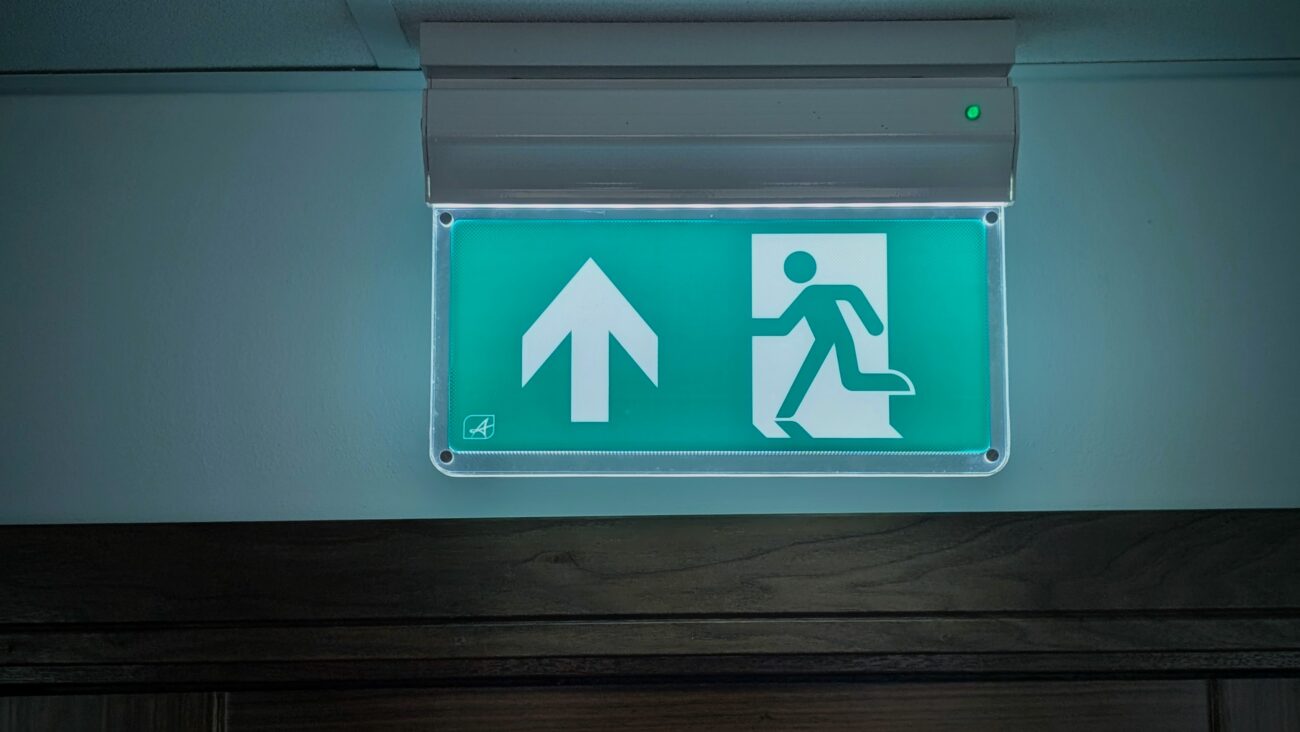
Here are some key benefits of Emergency Lighting
Bright, reliable lighting guides occupants safely toward exits when visibility is compromised, ensuring a swift and orderly evacuation.
Clearly illuminates extinguishers, call points, and safety equipment so they can be located instantly in a crisis.
Instant activation prevents confusion and accidents, keeping people calm and safe when mains power fails unexpectedly.
Professionally designed and installed to meet UK emergency lighting standards, keeping your premises legally compliant at all times.
Provides essential safety coverage across any property type, safeguarding tenants, staff, and visitors alike.
Kicks in instantly the moment power is lost, delivering reliable illumination without anyone needing to lift a finger.
Routine inspections and certified maintenance ensure your emergency lighting performs flawlessly when it’s needed most.
A complete, professionally maintained system means you can trust your premises are always protected and fully compliant.
FAQ
Emergency lighting is a battery backed lighting system that automatically switches on when mains power fails, ensuring people can see escape routes and safely evacuate a building. It can include escape route lights, exit signs and antipanic lighting.
Yes — most nondomestic premises (offices, shops, schools, care homes, common areas of residential buildings, etc.) need emergency lighting under the Regulatory Reform (Fire Safety) Order 2005.
The responsible person — typically the business owner, employer, landlord or building manager — must ensure lighting is installed, maintained and tested as required.
According to BS 52661 guidance:
✅ Escape routes — corridors, stairways, changes of level
✅ Final exit doors
✅ Near fire safety equipment (e.g., extinguishers, alarms)
✅ Large open areas (antipanic lighting)
✅ Hazardous areas or task locations as identified in a fire risk assessment
Minimum illuminance levels typically recommended in BS 52661:
- Escape routes: ~1 luxon centre line
• Open/antipanic areas: ~0.5 lux
• Highrisk tasks: higher (e.g., 10 % of normal lighting or ~15 lux) depending on tasks
(Lux is a measure of light level — these levels are considered sufficient to see and move safely.)
Maintained
Lights are on during normal use and remain lit on power failure (often used in public spaces).
Non-maintained
Lights only come on during a mains failure (common in corridors and stairways).
Failure to maintain and test emergency lighting is a legal breach. Fire authorities can issue enforcement notices, and serious failures have led to prosecution and significant fines.
Yes — a fire safety logbook recording all tests, defects and maintenance is essential to demonstrate compliance.
You’ll hear about:
- BS 52661 — UK code of practice for emergency lighting
- BS EN 1838 — emergency lighting performance (illumination levels)
- BS EN 50172 — emergency escape lighting system testing and logbooks
5-year photometric verification of emergency lighting is a periodic test used to confirm that an emergency lighting system still provides the required illumination levels and coverage after years of operation.
Get a Free Consultation
Fill out the form below and our expert team will get back to you within 24 hours